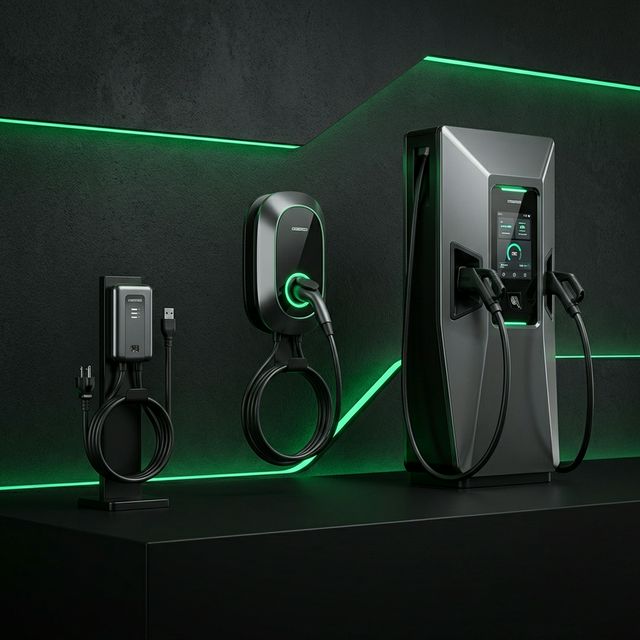
Not all chargers are created equal. Learn about the three main types and find the best fit for your EV lifestyle.
Uses a standard household outlet (120V). Perfect for overnight charging at home.
Uses a 240V outlet or dedicated EVSE. The sweet spot for home and workplace charging.
Direct current at high voltage (400V+). Ultra-fast charging for long-distance travel.
| Feature | Level 1 | Level 2 | DC Fast |
|---|---|---|---|
| Voltage | 120V AC | 240V AC | 400–900V DC |
| Charging Speed | 3–8 km/hr | 16–50 km/hr | 80% in 20–40 min |
| Full Charge Time | 24–48 hours | 4–10 hours | 20–60 minutes |
| Installation Cost | None (plug-in) | ₹30K – ₹80K | ₹5L+ |
| Best For | Overnight home | Home & workplace | Highways & fleets |
| Shareable on ChargeKr? | Yes | Yes (Popular!) | Yes |
Different EVs use different connectors. Here's what you need to know.
Standard in North America. Single-phase AC charging up to 7.4 kW.
European standard, widely used in India. Supports up to 22 kW AC charging.
Combines Type 2 with DC pins. Supports ultra-fast charging up to 350 kW.
Japanese standard used by Nissan and Mitsubishi. DC fast charging up to 62.5 kW.
Any charger type works with ChargeKr. List yours and start earning today.
Start Earning