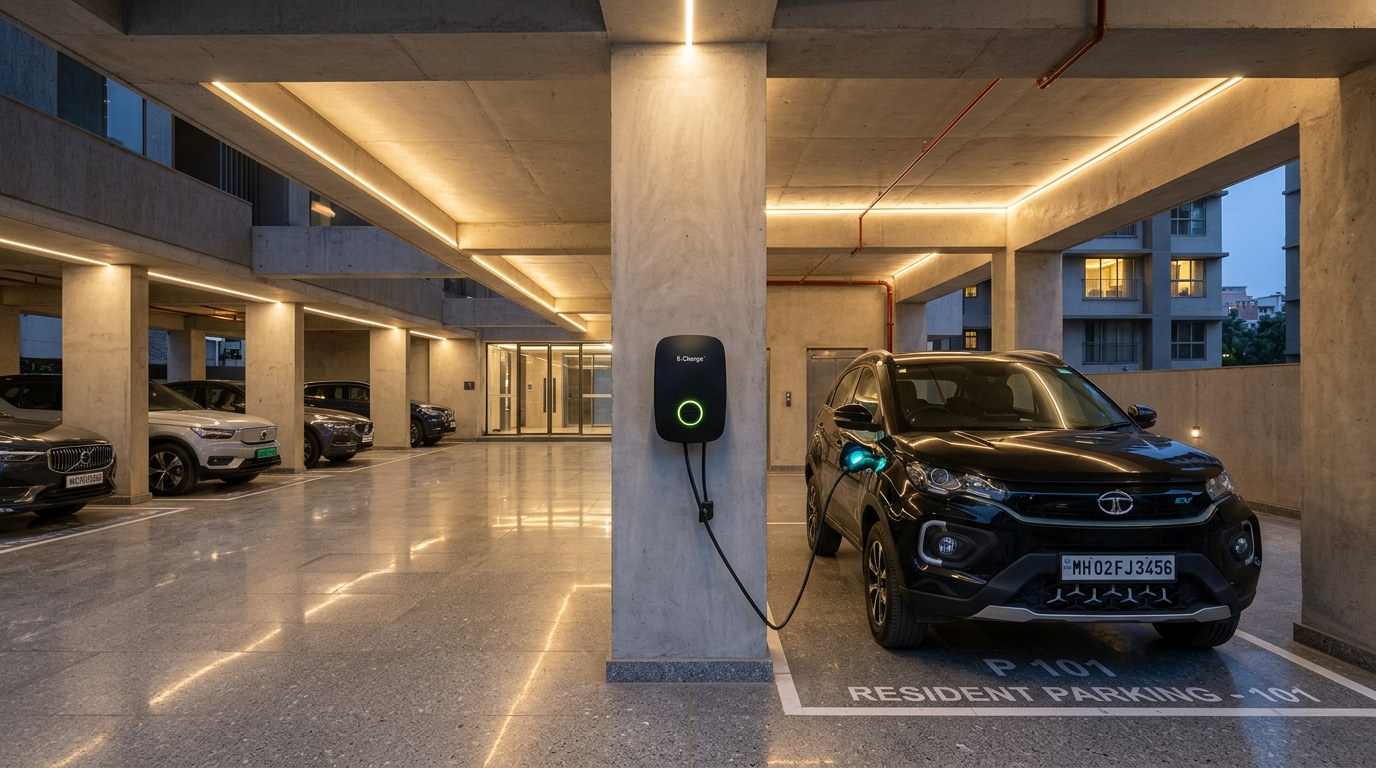
Zero direct tailpipe emissions
By removing charging bottlenecks for apartment renters and daily commuters, community hosts accelerate zero-emission EV adoption in high-density urban corridors.
Building commercial fast-charging plazas requires concrete excavation, new transformers, and prime urban real estate. Peer-to-peer charging activates the hardware already mounted on residential walls.
By removing charging bottlenecks for apartment renters and daily commuters, community hosts accelerate zero-emission EV adoption in high-density urban corridors.
Every kilowatt-hour delivered through a neighbour's wallbox utilizes existing electrical connections, displacing fossil fuel without building dedicated concrete plazas.
A single shared residential Type-2 wallbox can serve 4 to 5 neighbourhood EVs across a week instead of sitting dormant for 20 hours a day.
Sharing one existing 7.4 kW home charger among four neighbours avoids manufacturing three redundant copper-heavy units.
CIRCULARDistributed 3.3 kW and 7.4 kW AC charging across residential feeders places far less stress on city transformers than 150 kW DC clusters.
GRIDHomeowners with PM Surya Ghar rooftop solar systems can share their daytime solar charger access with visiting EVs to offset equipment and setup costs.
SOLARRWAs and housing societies can share common visitor-bay chargers without upgrading every individual flat's sanctioned load.
URBANWhether you drive an EV or own a home charger, you can join ChargeKr in under two minutes.